Showing posts with label social justice. Show all posts

Tuesday, July 26, 2016

An awakening...


"Stop Snitchin'"

This was a DVD that appeared in the national conscience in 2004, relating to drug dealers in Baltimore threatening violence against those who reported about their activities to authorities in exchange for a lighter sentence. It led to the phrase "Snitches get stitches," and it featured New York Knicks star Carmelo Anthony in a brief cameo. The video's creator, Rodney Thomas was sentenced to 15 years in prison for pleading guilty to first-degree assault. Despite claiming that it was a joke, Anthony's squeaky-clean reputation took a hit among fans across the league. (credit: Wikipedia)


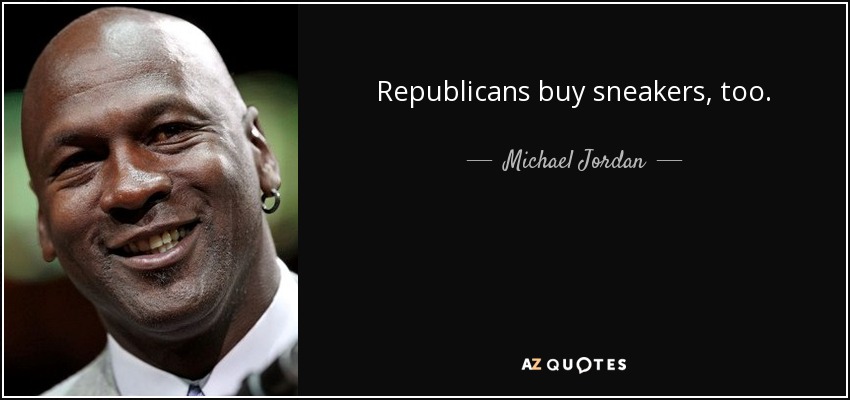
"Republicans buy shoes too."

These words were uttered by Michael Jordan in 1990 when asked why he would not endorse Harvey Gantt in the North Carolina Senate race against his Republican opponent, well-known segregationist named Jesse Helms. Jordan, who was the face of Nike, Gatorade, and the NBA at the time, was criticized for not being a voice in the community as fellow athletes of his ilk such as Kareem Abdul-Jabbar.

Which is why it was so refreshing to see these two in particular become the headline players as we've seen violence between law enforcement and citizens like never before. We have seen in the news countless stories of brutality and retaliation, creating a cultural divide, with it seemingly being played out over our airwaves and on social media. We've seen LeBron James and others take a stand after the Trayvon Martin shooting, and countless others during the Black Lives Matter movement. It was a throwback to an era when being outspoken could leave an athlete ostracized from endorsements and receive the ire of fans who want their players to focus on their athletic prowess as opposed to being a voice. The late Muhammad Ali was not as beloved by folks (both black and white) in the 1960s when he loudly spoke out against the Vietnam War. When we watched how O.J. Simpson avoided getting involved in the same issues, it was disturbing to see how disconnected he really was.

However, it was great to see Anthony come out himself and mention that "it's not about endorsements," and that athletes should speak up about the devastation that's going on around them. Even more, to see Jordan speak not only with his voice but with his dollars, shows that today's athlete has separated himself from focusing on simply the "brand." The focus should not be on the results, but the decision of these athletes to realize that there comes a time to go beyond the clichés and media-friendly quotes. A revolution has begun among athletes, and the ones who fall behind it are the ones who sit back and do nothing.


Wednesday, April 13, 2016

What do you stand for?


"You don't steal the base you just left. You steal the base ahead of you."
-Jackie Roosevelt Robinson

As discussed in detail yesterday, the life of Jackie Robinson was defined by not so much what he did to integrate baseball, but what we was as a man. Dedicated, committed, and a fierce competitor on the diamond and off of it. His later years were more revealing of who he was more so than when he was stealing bases at Ebbets Field. Although his body was breaking down by age 33, his spirit never did. Once he had finished his epic career, he transitioned into business management at Chock Full O' Nuts, while being the first black writer at the New York Post. It was then when he decided to use his platform for social change, with the rising civil rights movement beginning to take America by storm. 

The 1960s were an era of an awakening; when the echoes of America's forefathers gave way to the rising voices of youth who were disenfranchised with the establishment dividing the races and decided to take their fights to the streets. Robinson felt he had an obligation to be a voice, and met with dignitaries such as then-Vice President Richard Nixon as well as Dr. Martin Luther King, Jr. to encourage America to put away its legalized racism and embrace other cultures. Baseball had already crossed the color line, he thought, why not our businesses and government?

He wasn't alone, as later star athletes such as Jim Brown and Muhammad Ali would lend their voices outside the field of play and draw attention to very serious issues plaguing the black community. Before he retired, he would often speak about not being able to see black third basemen coaches in baseball. A few days before he died in 1972, he got to see Frank Robinson as one of the coaches during the World Series.


We live in an era in which the pursuit of social justice is either misguided or secondary to the pursuits of worldly gain. We still as fans look for voices who are not afraid to stand up and say, "No!" to the rafters when they see injustice happening to their communities and families affected by poor leadership in Washington. Remember the "Justice for Trayvon" movement? A movement's greatest impact should be not just about changing laws, but bettering lives. That is a lesson many athletes are now realizing, especially in the social media era where any voice can be heard over 140 characters.


The next time you hear someone quote Charles Barkley's "I'm Not a Role Model" speech, ask the children who marveled at the very sight of a man who didn't set out to be one at first, but later realized how he had no other choice, and in that changed the course of history.